
The PSTN switch-off is a major shift in telecommunications. It's not just about phones. This transition affects many services beyond traditional landlines.
Scheduled for completion by 2027, the UK's PSTN switch-off marks a move to digital solutions. This change impacts businesses, individuals, and various technologies.
PSTN technology supports more than just voice calls. Alarm systems, payment terminals, and fax machines also rely on it.
As the switch-off approaches, understanding its broader implications is crucial. Businesses and individuals must prepare for this digital transformation.
This article explores the PSTN switch-off and its wide-ranging effects. Learn how to navigate this change and seize new opportunities.
What is the PSTN and why is it being switched off?
The Public Switched Telephone Network (PSTN) has been the backbone of telephony for decades. It connects calls using copper wires and circuit switching.
This system was once the pinnacle of telecommunications technology.
However, technological advancements have shifted the focus. Digital solutions like VoIP have emerged, offering superior performance and flexibility. These modern options are cheaper to maintain and can support a wider array of services.
PSTN is becoming outdated. Maintaining its ageing infrastructure is costly and inefficient compared to digital networks. These factors are driving the decision to phase it out.
There are several reasons for the transition, including:
- Reducing operational costs
- Improving network efficiency
- Enabling advanced digital services
Switching to digital networks is not just about cost savings. It's about adopting new technologies that enhance communication and connectivity. The shift supports a more sustainable and efficient future for telecommunications globally.
The timeline: Key dates for the UK PSTN switch-off
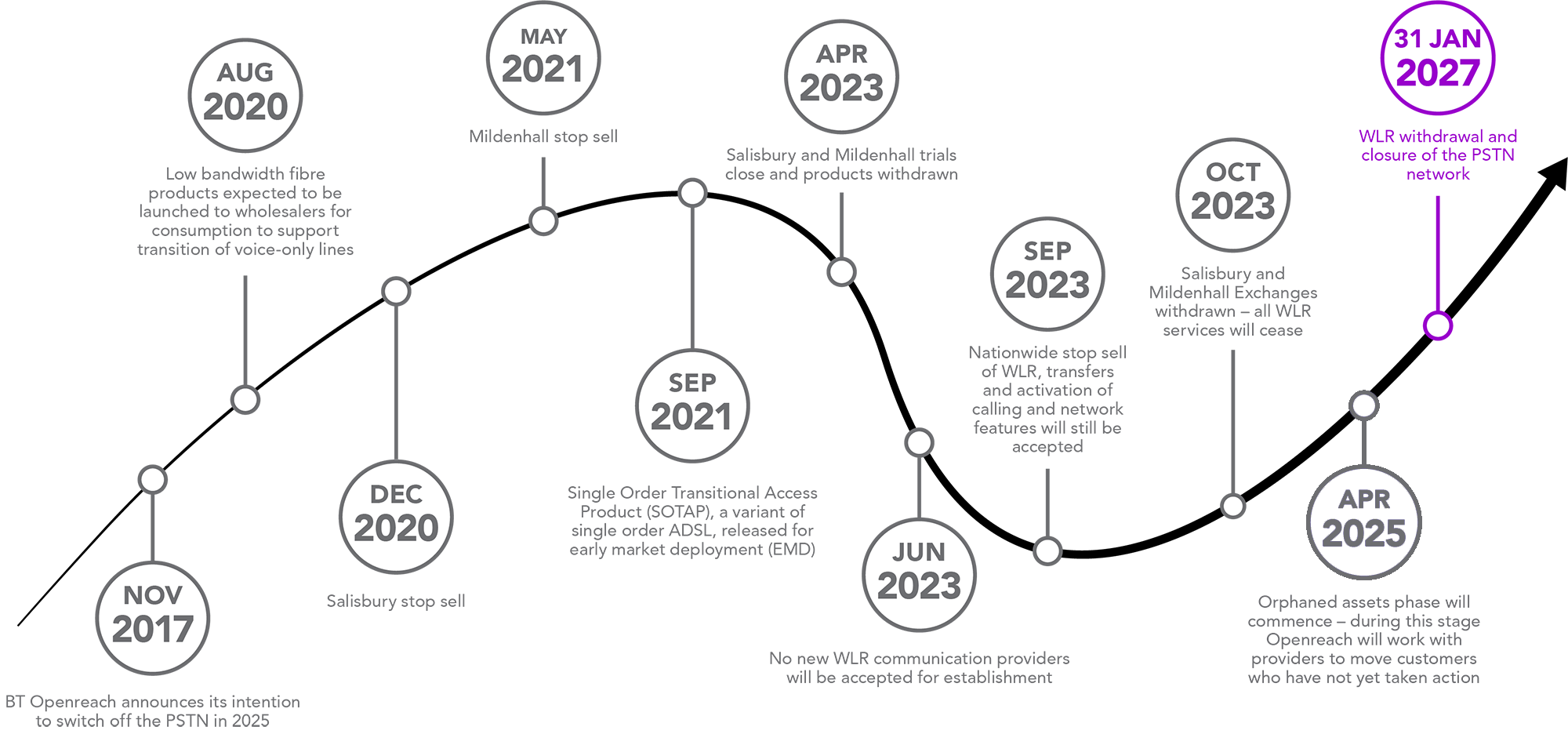
The phased approach to the PSTN switch off in the UK is already underway. By 2025, traditional systems began winding down to pave the way for a complete transition.
The full switch off will happen 31 January 2027. Up until then, telecommunications providers will shut down the old systems. It's crucial for businesses and individuals to upgrade their infrastructure before these deadlines.
Throughout the process, providers will communicate important dates and changes. Awareness and readiness will play key roles in ensuring a smooth transition. Consumers should stay informed to avoid disruptions in services. Transitioning successfully means embracing digital replacements early and effectively integrating them.
It’s not just about phones: what else relies on PSTN technology?
PSTN technology is foundational beyond just telephones. Many systems depend on it, although we often overlook them. This reliance extends into several critical areas of daily life.
Businesses use PSTN lines for more than voice calls. Here are some common applications:
- Fax machines crucial for document transmission.
- Alarm systems that ensure security.
- Payment terminals for processing transactions.
Transitioning affects each of these systems. For instance, fax machines might need a shift to digital transmission services. Alarm systems will require reconfiguration to remain operational.
For consumers, understanding these dependencies is vital. Identifying which home technologies are affected helps in planning. Preparation will ensure seamless service continuity during the transition. Adopting digital solutions early is essential to avoid last-minute issues.
The impact on businesses and individuals
The PSTN switch off has far-reaching effects beyond initial expectations. Businesses must prepare to adapt their communication infrastructure.
It is more than just replacing phones; it is a technology overhaul.
Businesses will face several implications:
- Need for network upgrades.
- Investing in new compatible equipment.
- Training staff on digital systems.
Each enterprise must analyse its specific needs. Operations relying on legacy systems may face disruptions. Planning and budgeting become critical to minimise impact.
For individuals, the change is significant. Home systems like alarms and phones will need updating. It's essential to assess what technologies you use that rely on PSTN. Early action prevents unexpected service interruptions.
Consumers should contact service providers promptly. Understanding new offerings will ease the transition. Awareness and action can simplify this shift, avoiding unnecessary headaches later.
Staying informed helps both businesses and individuals. Adapting to digital networks ensures continuous, efficient connectivity. Preparation is key to a smooth transition into this new era.
PSTN replacement options: moving to digital solutions
As the PSTN era winds down, various digital solutions are emerging. The goal is to provide better service and flexibility. VoIP, or Voice over Internet Protocol, is leading the charge in this transformation.
VoIP offers many benefits. Businesses find it cost-effective and feature-rich compared to traditional services. Calls are clearer, and integration with other digital tools is seamless. It supports flexible work arrangements, an advantage for modern workplaces.
Another option is broadband-based communications. It allows for data and voice transmission over a single line. With broadband, services like internet access and video conferencing become integrated. This enhances productivity and lowers expenses.
Exploring PSTN replacement options will lead you to:
- Assess VoIP options.
- Consider broadband-based solutions.
- Evaluate mobile and 5G alternatives.
Each solution has its unique strengths.
For a full breakdown of which replacement fits which service, see our PSTN replacement services guide.
Choice depends on specific needs and infrastructure. Transitioning now can unlock new opportunities for growth and innovation. Embrace these digital solutions to stay connected and competitive.
Preparing for the transition: steps to take now
The switch-off of PSTN requires thoughtful preparation. Begin by assessing your current systems. Identify which rely on PSTN and need replacement or upgrading.
Consult with your telecoms provider to understand timelines. This ensures you have ample time to transition smoothly. Providers can offer insights on compatible digital alternatives.
Planning the budget is crucial. Factor in costs for new equipment, installation, and potential training. This will help mitigate unforeseen expenses down the line.
Communication is key. Inform employees and customers about upcoming changes. Clear communication will ease the transition and manage expectations effectively.
To ensure a seamless transition, consider the following steps:
- Conduct a system audit.
- Engage with your service provider.
- Budget for new technologies.
- Communicate plans and updates.
- Train staff on new systems.
Educating your team is vital. Offer training sessions to familiarise them with new technology. Adaptation is easier with a knowledgeable team.
The transition is an opportunity. Embrace innovation and improve operational efficiency. Proper preparation minimises disruptions and maximises the benefits of digital solutions.
Opportunities and challenges ahead
The PSTN switch off opens doors for new opportunities. Businesses can adopt innovative digital technologies that enhance communication and efficiency. This shift can lead to significant cost savings and increased flexibility.
However, there are challenges to navigate. The transition to digital networks can be complex. It demands careful planning and coordination.
Businesses must ensure they have the right resources and support to manage potential disruptions.
Environmental goals align with the switch off. Digital networks reduce energy consumption. This creates a pathway to sustainability whilst driving technological advancement. The transformation enhances connectivity, supporting the development of smart technologies and facilitating growth in the telecommunications sector.
Next steps
Successfully handling the PSTN switch‑off takes more than simply upgrading phone lines. Organisations need a clear migration roadmap, modern digital communication tools, and reliable long‑term support to maintain operational continuity.
Wavenet provides a dedicated PSTN switch‑off service that helps organisations transition seamlessly from traditional telephony to fully IP-based communications. We start with a comprehensive review of your current setup, identifying any systems still dependent on PSTN and recommending modern replacements such as VoIP, SIP, and cloud-hosted voice solutions.
From planning and deployment to training and ongoing assistance, we work closely with your teams to minimise disruption and ensure a smooth transformation. The result is communication that remains resilient, secure, and future‑ready as the UK completes its move away from PSTN infrastructure.